
How Automated Scheduling Software Improves Team Coordination
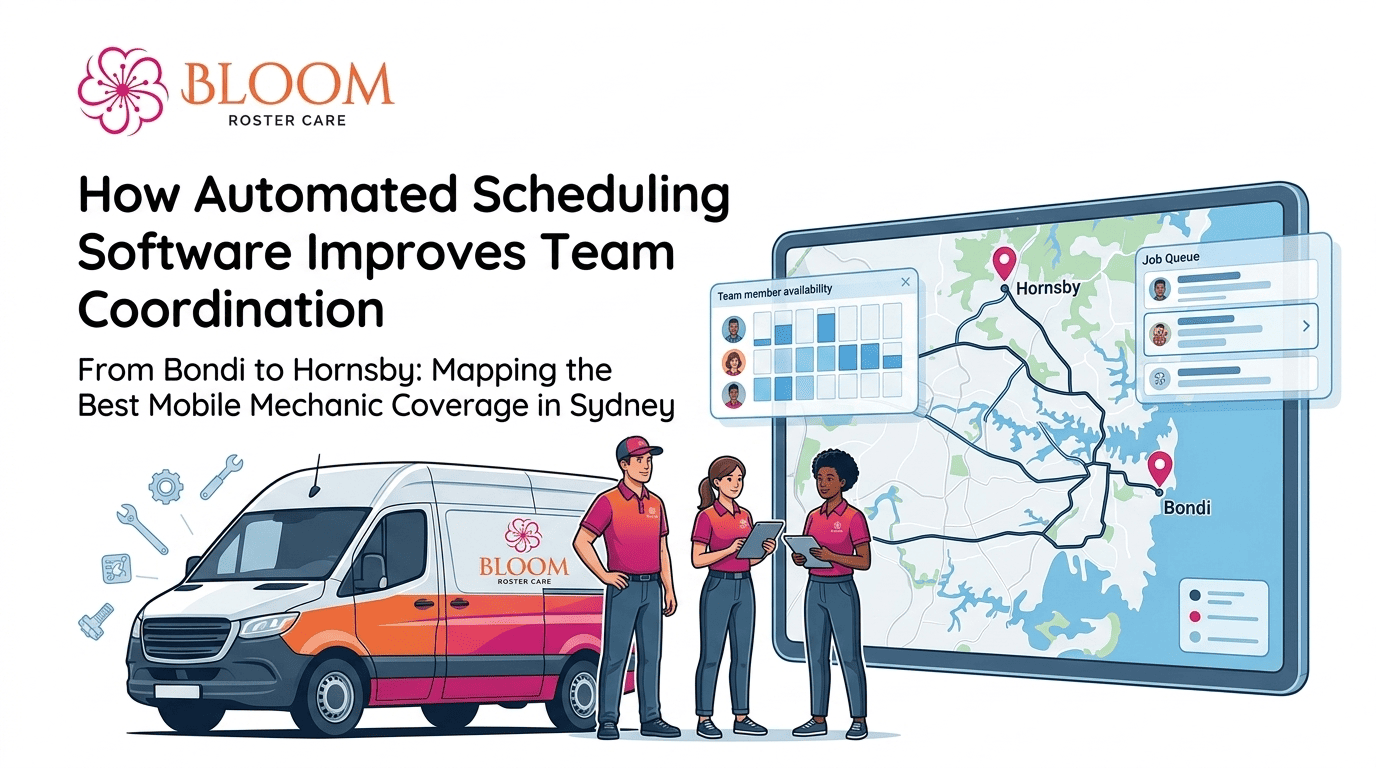
Organisations need to establish proper team coordination systems because they need these systems to maintain their competitive edge in today's business environment. The process of assigning people to their tasks together with their project schedules becomes more challenging for both small startups and medium-sized enterprises. The introduction of automated scheduling software fundamentally transforms operational processes. Organisations can enhance their business operations through the deployment of intelligent systems that automate their manual processes, which results in reduced errors and improved employee collaboration.

The Coordination Challenge
The main reasons for scheduling problems because of poor time management skills and their accompanying issues create issues for organisations. The implementation of ineffective scheduling methods results in both operational mistakes and productivity losses. The process of shift allocation will require extensive time from managers because last-minute changes will generate confusion for staff members. The following outcomes result from organisational inefficiencies:
- Deadlines that are missed
- Employee dissatisfaction
- Productivity that is lower than it should be
- Operational costs that are higher than they could be
Workforce scheduling software helps to create a single point of reference for scheduling and makes it easier for managers to make better decisions.
What is Automated Scheduling Software?
A scheduling app is a digital programme that uses algorithms and real-time data to develop and manage schedules while also helping to increase the efficiency of the scheduling process by automatically optimising the generated schedule. The computer uses automated processes to produce schedules that factor in the availability of employees and distribute the workload and accommodate organisational requirements. Employee scheduling software provides real-time updates to all team members about their work duties and shift times and project deadlines, which distinguishes it from conventional scheduling methods.
Key Ways it Improves Team Coordination
1.Centralising Your Workforce Schedule
The most valuable benefit of having automated scheduling software is that it allows you to centralise all your scheduling for multiple locations. No longer will you have to sort through emails or individual documents to view your schedules; everything will be located on a single platform. Through the use of workforce scheduling software, both your managers (or supervisors) and your employees will:
- immediately view their schedule
- track their schedule updates and changes in real time
- get their schedule updates regardless of where they are located
This gives transparency to your team and removes any potential confusion from your team.
2. Real-Time Notifications and Updates
Poor coordination can be attributed to a significant amount of time it takes for communication to happen. The use of employee scheduling software provides an avenue to resolve this issue by enabling real-time notifications to employees for schedule changes, shift swaps and updates.
- When an employee's shift assignment is changed, they receive a notification immediately.
- When managers have a conflict or gap in the schedule, they receive a notification.
- When you furnish team members with an updated program, nobody is required to call to remind them.
Your company will maintain a well-operated presence through achieving this kind of progress.
3. Improved Resources Allocation
Efficient resource coordination needs organisations to assign personnel who possess suitable skills for required job functions according to their current workload status. The automated scheduling software uses its capability to analyse skills and availability and workload data to help companies develop their resource distribution systems. By using workforce scheduling, a company can accomplish three things:
- Efficiency increases.
- Team performance improves.
- Team members work more effectively as a group.
4. Reduced Scheduling Conflicts
In many cases, manual scheduling can result in double-bookings, overlapping shifts or missed assignments. Employee scheduling software will automatically find and eliminate these types of conflicts. By using an automated scheduling programme, managers can do the following:
- Instantly identify any dashes
- Resolve any issues before they become more serious
- Ensure that the various teams’ schedules stay coordinated at all times
Taking this proactive approach reduces disruptions and ensures that workflows remain uninterrupted.
5. Enhanced collaboration Across Teams
Businesses today frequently utilise cross-functional teams in their operations. The absence of a unified system makes it difficult for employees to coordinate activities between departments. Workforce scheduling software can provide the following:
- All departments with access to a common information database
- Simple and clear communication between team members
- More effective alignment of tasks that are dependent upon each other
Collaboration will be more streamlined and productive when all participants are utilising one system.
6. Flexibility and Employee Empowerment
Flexibility is a key principle valued by today’s workforce. Some employee scheduling software provides employees the ability to:
- Request shift changes
- Swap shifts with employees
- Update their availability
All of these functions eliminate the need to rely on a third-party manager to manage employee schedules and give employees the ability to manage their schedules independently. Automating the scheduling process means that flexibility is achieved without sacrificing the coordination of the scheduling process; in fact, automated scheduling enhances the level of coordination by allowing all changes to be documented and approved in the same system.
7. Data-Driven Decision Making
The most useful aspect of workforce scheduling software may be its analytical capabilities. The manager can make use of historical analysis to determine scheduling patterns, which ultimately leads to their ability to better create optimal schedules for future hires. For instance, data can be used to analyse the following:
- Hour of peak production
- The number of employees required
- Trends in attendance
Businesses that use this data in decision-making will ultimately have better efficiency and teamwork than those that do not.
8. Time Savings for Managers
Scheduling manually takes a lot of time and is usually repetitive. Automation will help to lessen that effort by automating common responsibilities. This way, managers will be able to:
- create a schedule within minutes
- concentrate on strategic planning
- offer their support for their team more
Making the change from administrative duties to leadership creates better coordination and enhances team spirit all together.
9. Increased Accountablity
By using clearly defined schedules, employees become more accountable. Using employee scheduling software, employees understand what is expected of them as well as their peers.
- Automating your scheduling system allows businesses to:
- Monitor employee attendance and performance
- Verify that all employee tasks have been completed
- Create an environment where employees are held accountable for their assigned responsibilities
By establishing clearly defined schedules, misunderstandings are reduced, improving work team discipline.
10. Scalability for Growing Teams
When companies expand, scheduling becomes more difficult. A solution that is efficient for running a small group may not work for the same large group. Workforce scheduling software will provide an adequate way to schedule employees through scale and ideally the following:
- management of increased employee size
- scheduling of employees within multiple locations
- scheduling of employees as operational complexities increase
Scalability will create a long-term sustainable solution, keeping businesses efficient with no loss of efficiency.
Conclusion
The successful operation of an organisation depends on its achievement of proper team coordination. The most skilled teams will face performance challenges without proper coordination. The automated scheduling software delivers an intelligent solution to the problem by providing structured scheduling solutions which enhance communication and permit simultaneous teamwork. Businesses achieve improved efficiency and employee empowerment through employee scheduling software and workforce scheduling software, which creates a coordinated work environment. The outcome produces improved schedules which develop teams into stronger units that support ongoing growth.
Also Read :- Top 5 Strategies to Prevent Support Worker Burnout in Disability Care