
Top 5 Strategies to Prevent Support Worker Burnout in Disability Care
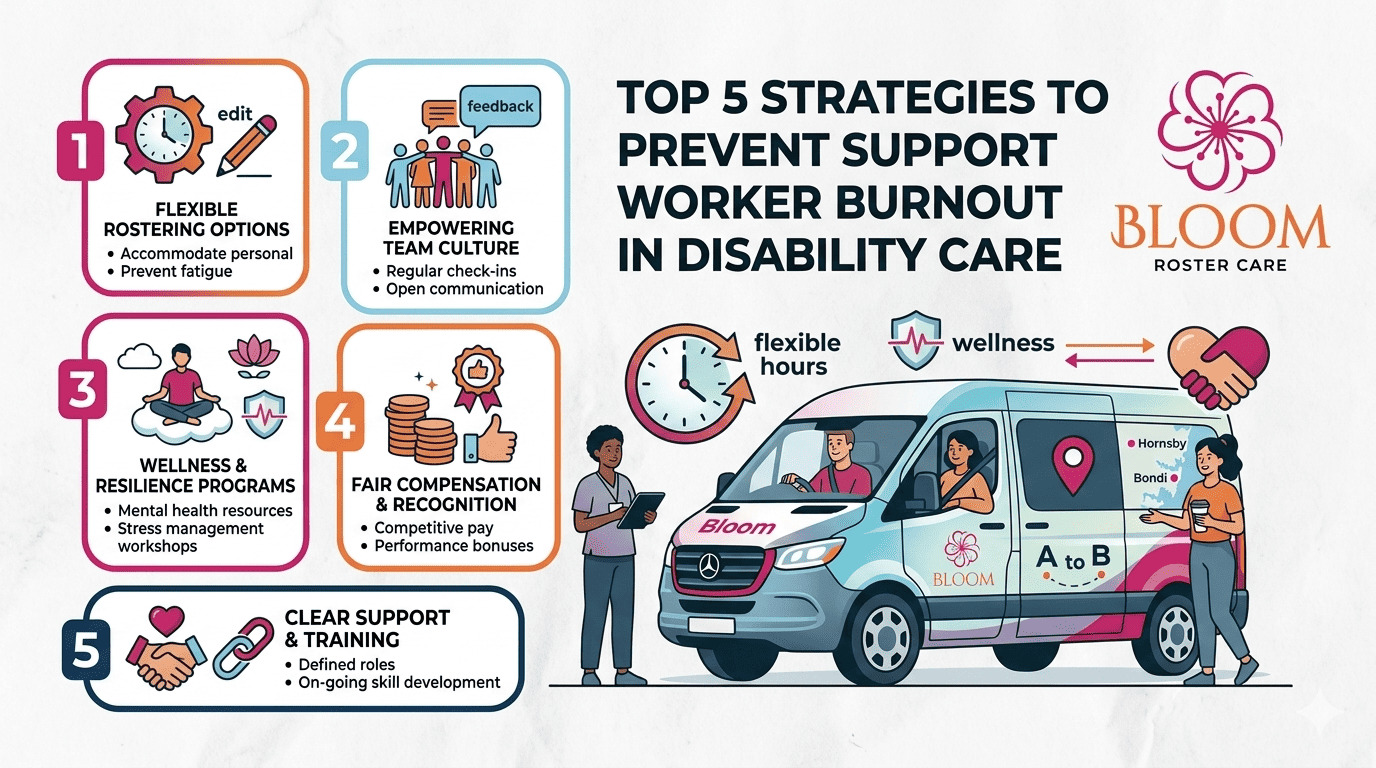
In the disability care sector, support workers are the backbone of the industry. They provide essential services that help individuals to live more independently. However, the nature of the job is to—often involving high emotional labor, physical demands, and irregular hours—makes these workers highly tired.
Excessive and prolonged stress creates a state of emotional, physical, and mental exhaustion, which results in burnout. High burnout rates, for NDIS providers, lead to increased staff turnover, inconsistent care of participants, and rising recruitment costs.
To build a sustainable care business, providers must transition from reactive management to proactive support. In the article, here we mentioned the top five strategies to prevent support worker burnout. Also, how modern technology can support these initiatives.

1. Prioritise Fair and Predictable Scheduling
One of the leading cause of stress in the disability sector is "roster anxiety." When staff members receive their schedules late, or find themselves working inconsistent hours with no clear pattern, it becomes impossible for them to manage their personal lives. This lack leads to the fast track of exhaustion.
Include a workforce scheduling software is a must. It guides managers to create rosters well in advance. Predictability gives workers a sense of control. It's easy for them to plan medical appointments for the next month, family time, and rest days without fear of sudden or unexpected shifts.
Burnout often occurs when the same "reliable" employees are constantly asked to cover gaps or work undesirable shifts. By using of a digital roster management tool, this ensures that shift distribution is transparent and equitable. Also, that everyone carries a fair share of the workload.
2. Create Culture of Open Communication & Feedback
Support workers often work in isolation. They spend many hours in the client's home or in the community. They feel disconnected from their management without a physical office or a regular team environment. This isolation can magnify the stressors of the job.
To overcome with this, providers must establish a "feedback loop." Regular check-ins should go beyond compliance or task completion; they should also prioritize a worker's well-being.
*Create space where workers can share their experiences and decompress.
*Ensure workers know how to contact if a specific shift or participant interaction is becoming emotionally taxing.
By implementing a mobile-friendly scheduling software, managers can send quick check-in messages to their staff after long shifts. It shows that their hard work is noticed and appreciated.
3. Empower Workers to Work Independently
The correct management is a major contributor to workplace stress. In contrast, providing workers with the tools to manage their own professional lives fosters a sense of agency. When workers feel they have a "say" in how they work, they are more resilient to stress.
Technology plays an important role here. A modern roster management tool often includes an employee self-service portal. This allows staff to:
*Set their own availability.
*Request leave easily through an app.
*Swap shifts with qualified colleagues
Employees feel happy and satisfied at work when they can easily swap shifts, attend their child's school event, or take a mental health day without lots of paperwork. This flexibility helps to reduce stress and prevent burnout.
4. Invest in Continuous Training and Skill Development
Burnout often gets worse sometimes. It feels like you're not doing your job well or don't have the skills to handle challenges. In disability care, workers may encounter complex behaviors or medical needs that can be overwhelming if they don't feel properly trained.
Regular training ensures compliance and also helps in building confidence.
*Specialized Training: Offer courses on de-escalation techniques, mental health first aid, or specific disability types (e.g., autism-specific care).
*Career Pathways: Show your support workers that there is room to grow within your organization. A worker who sees a future as a team leader or a specialist is more likely to stay engaged.
When you use a high-quality workforce scheduling software, you can track these certifications within the system. This ensures that you only assign workers to shifts for which they are fully trained, preventing the stress of being "thrown into the deep end" without the necessary skills.
5. Recognize and Reward Contributions
In the fast-paced world of disability care, it is easy to move from one crisis to the next without pausing to say "thank you." However, recognition is a powerful antidote to burnout. When workers feel undervalued, their motivation plummets.
Recognition doesn't always have to be monetary. It can include:
*Public Shout-outs: Mentioning a worker's great performance in a company newsletter or group chat.
*"Worker of the Month": Providing a small gift card or a preferred parking spot.
*Wellness Days: Offering an extra day of "recharge leave" for those who have gone above and beyond.
Effective recognition requires data. A roster management tool helps managers identify those who are consistently punctual, those who step up to cover emergency shifts, and those who receive positive feedback from participants. Data-driven recognition ensures that your rewards are fair and based on merit, further strengthening the trust between staff and management.
The Role of Technology in Protecting Your Team
It is impossible to manage a large team of support workers manually without something falling through the cracks. Manual errors in rostering—such as accidentally scheduling someone for a double shift or failing to account for travel time—directly contribute to staff fatigue and resentment.
By integrating a specialized workforce scheduling software like Bloom Roster Care, you aren't just buying an administrative tool; you are investing in the health of your workforce. These tools provide the transparency, fairness, and communication channels necessary to catch the signs of burnout before they result in a resignation.
Conclusion
Preventing burnout in disability care requires a holistic approach that combines empathy with efficiency. By prioritizing predictable schedules, fostering communication, empowering staff with self-service tools, investing in training, and recognizing hard work, you create an environment where support workers can thrive.
Remember, a supported worker provides better care. When you take care of your team, they are better equipped to take care of your participants. Using a dedicated roster management tool is the first step toward building a resilient, happy, and long-lasting workforce that will see your NDIS business into the future.
Also Read :- Why Cloud-Based Roster Software Is the Future of Scheduling