
Avoid Scheduling Issues with a Reliable Disability Shift-Planning App
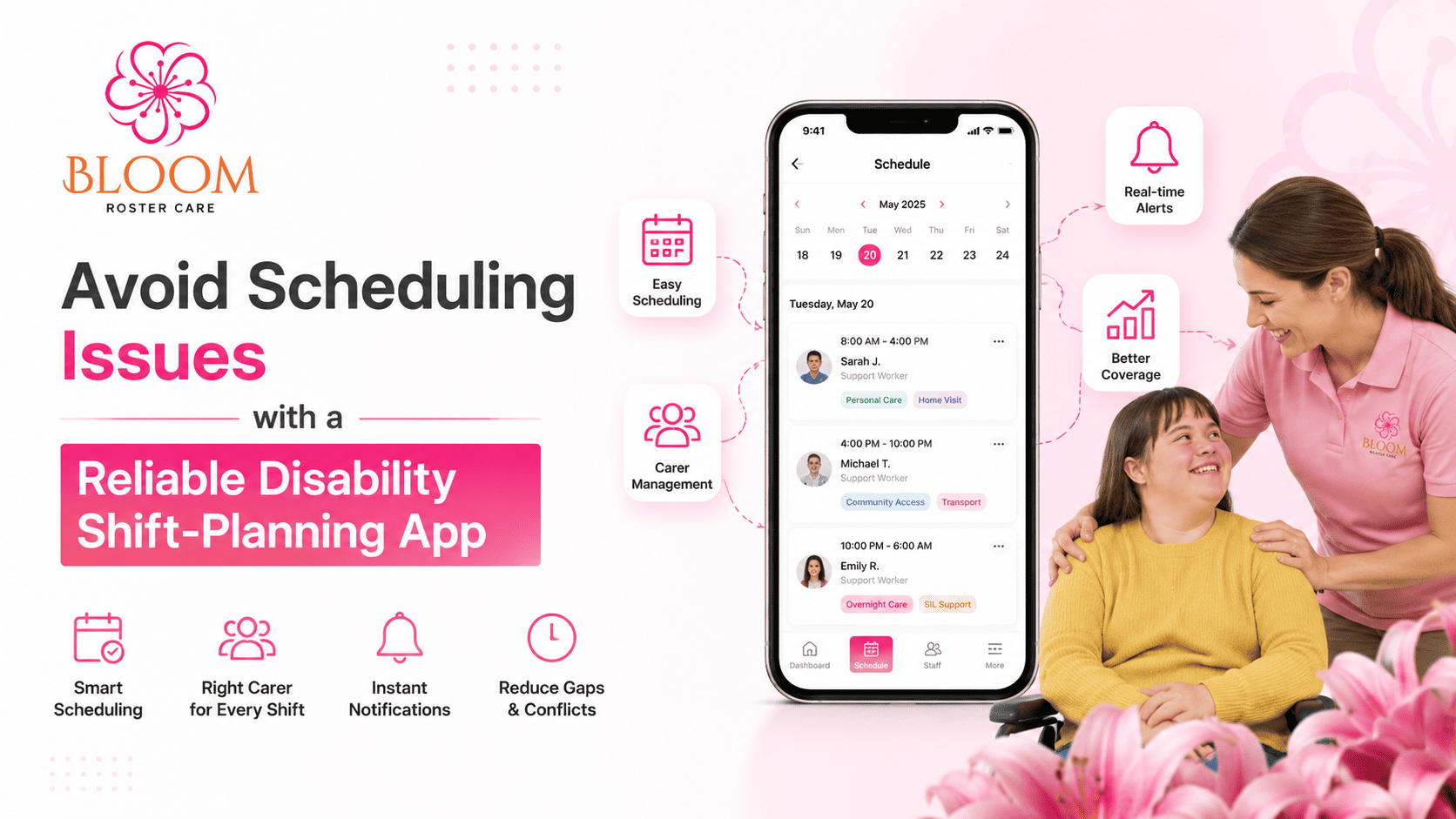
Workforce scheduling is complex and sensitive for numerous disability support organisations. While service providers have an obligation to maintain provision of consistent quality support services to their clients, they must at the same time accommodate staffing skills, competence, legal obligations and constant last-minute changes. Manual procedures and systems such as spreadsheets, paper-based rosters and others are common practice in many service providers; however, an inadequate system often results.
This is the exact scenario in which a trusted, professional staff shift planning app disability providers can count on can be implemented. By using innovative workforce technology, companies are able to simplify the task of rostering staff, decrease administrative overheads and provide their customers with seamless, undisrupted service.
Common Scheduling Challenges in Disability Services
Disability support organisations operate in a rapidly changing environment. Participants can unexpectedly fall ill, need an extra number of hours with support services and unforeseen service demands arise. The main types of scheduling problems include:
- Double-booking support workers
- Unfilled shifts due to last-minute cancellations
- Difficult tracking staff availability
- Compliance and qualification management challenges
- Excessive administrative workload
- Poor communication between coordinators and support staff
Such problems can cause interruption of service, employee dissatisfaction, and higher costs. In a service that relies on consistency of care, even small scheduling mistakes may be costly.
The Benefits of Digital Shift Planning
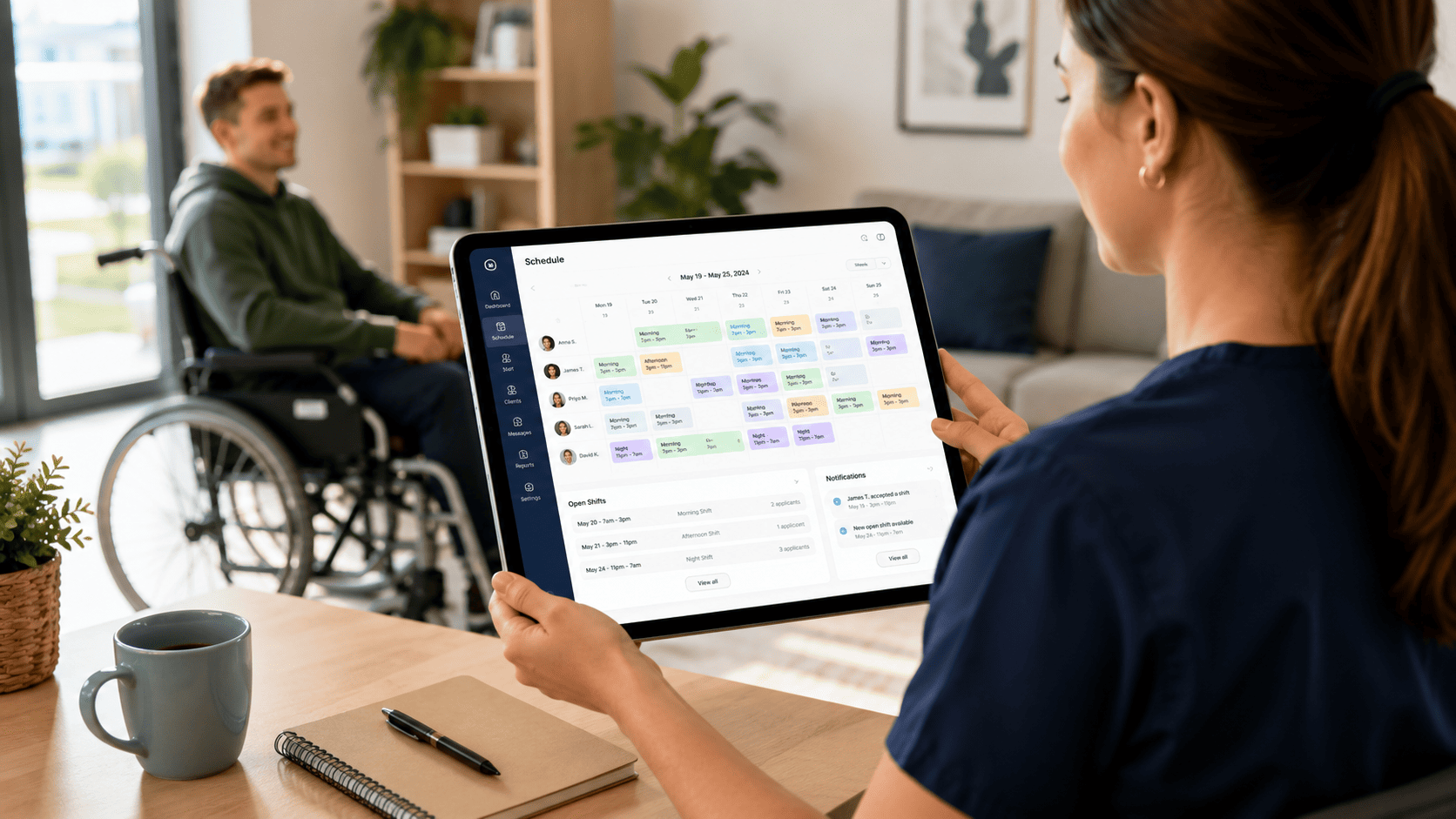
A reliable scheduling system gives providers the ability to be more effective and precise when scheduling complicated rosters. Managers can avoid long hours spent in compiling schedules manually by automating most repetitive processes and have more time devoted to better supporting participants. An up-to-date shift planning app that disability organisations adopt can provide real-time access to workers' availability, shift schedules and participants' needs.
This minimises the occurrence of any conflict situations and ensures a match is found between the appropriate worker and participant. With computerised scheduling, staff can access the rotas and can also accept changes to the rosters and be notified via their mobile phones. This keeps everyone up-to-date and reduces the number of mistakes and miscommunications.
How Reliable Rostering Improves Service Delivery
It is about providing quality care rather than just having employees on a schedule. This occurs when appropriate staffing is utilised to provide person-centred care. The ability to provide person-centred care when managers are using cutting-edge rostering software for disability services will enable the manager to:
- Match workers based on skills and qualifications
- Monitor staffing levels across multiple locations
- Quickly respond to roster changes
- Reduce scheduling errors
- Maintain compliance requirements
Automatic rostering provides consistency of staff members who are known to the individuals. This enhances trust and quality of care.
Reducing Administrative Workload
Significant amounts of a coordinator's time may also be spent on administrative tasks such as the creation of rosters, managing swaps in availability and communicating changes in the schedule, which is very time-consuming work if done manually. The development of technology can ease these tasks tremendously; automatic rosters can be made using established rules, preferences of staff and client requirements, therefore saving hours of manual amendment and when it takes less time to roster people for shifts, organisations have more time to focus on the well-being of clients, staff training and service development.
Managing Administrative Workload
Compliance is another significant issue facing disability care providers. It requires that all staff have current certifications, training and qualifications assigned to each shift, ensuring they're able to take on specific shifts. Today's rostering software for disability care providers usually has features built-in to check the compliance of staff. This notifies the manager when an award certificate is nearing expiry or when a staff member has been assigned to a position that they do not have the right qualification for. This proactive and greater approach is risk-mitigating and ensures all providers meet the requirements to provide the best possible level of care, as well as more confidently being able to present during audits and report preparation.
Improving Staff Satisfaction and Retention
The role of support workers is fundamental in quality service delivery within disability services. Conversely, inadequate scheduling practices may lead to stress, job dissatisfaction and burnout of employees. A trustworthy scheduling software offers staff members more visibility and flexibility in their rosters. Employees can see their schedules in real-time, change their availability, apply for leave and receive immediate notification of any changes to the rosters. These features can promote a more positive working environment by minimising confusion and maximising communication. If employees feel informed and empowered, they are likely to remain dedicated.
Supporting Growth with Workforce Management Technology
Disability service organisations often face challenges when managing their workforce as their organisations expand. With more staff, more service sites and more participants, the sheer number of tasks involved in managing schedules and workforces becomes very difficult to handle by traditional means. Disability workforce management software has proved extremely useful to address these needs by providing a central database for scheduling, time tracking, coordination and reporting of your workforce. By implementing disability workforce management software, organisations get a much better understanding of workforce performance and utilisation. This allows you to make more informed decisions, increase productivity and ensure that your services are scalable to manage future growth.
Conclusion
Inability to schedule appropriately can pose a real challenge to the disability service provider and can impact staff efficiency, user satisfaction, and the quality of service provided. Using a manual rostering system, organisations can suffer from administrative errors, lack of coordination, and communication breakdowns. The effective disability rostering tool not only assists organisations with improving staff efficiency and managing rostering well but also enables the company to maintain a stable compliance level, enhancing service delivery and staff satisfaction. A disability rostering solution saves the organisation's time in avoiding scheduling disturbances, supports the staff, and assists service recipients with consistent service provision.
Also Read :- Reduce Scheduling Stress with a Disability Job Scheduling App