
Reduce Scheduling Stress with a Disability Job Scheduling App
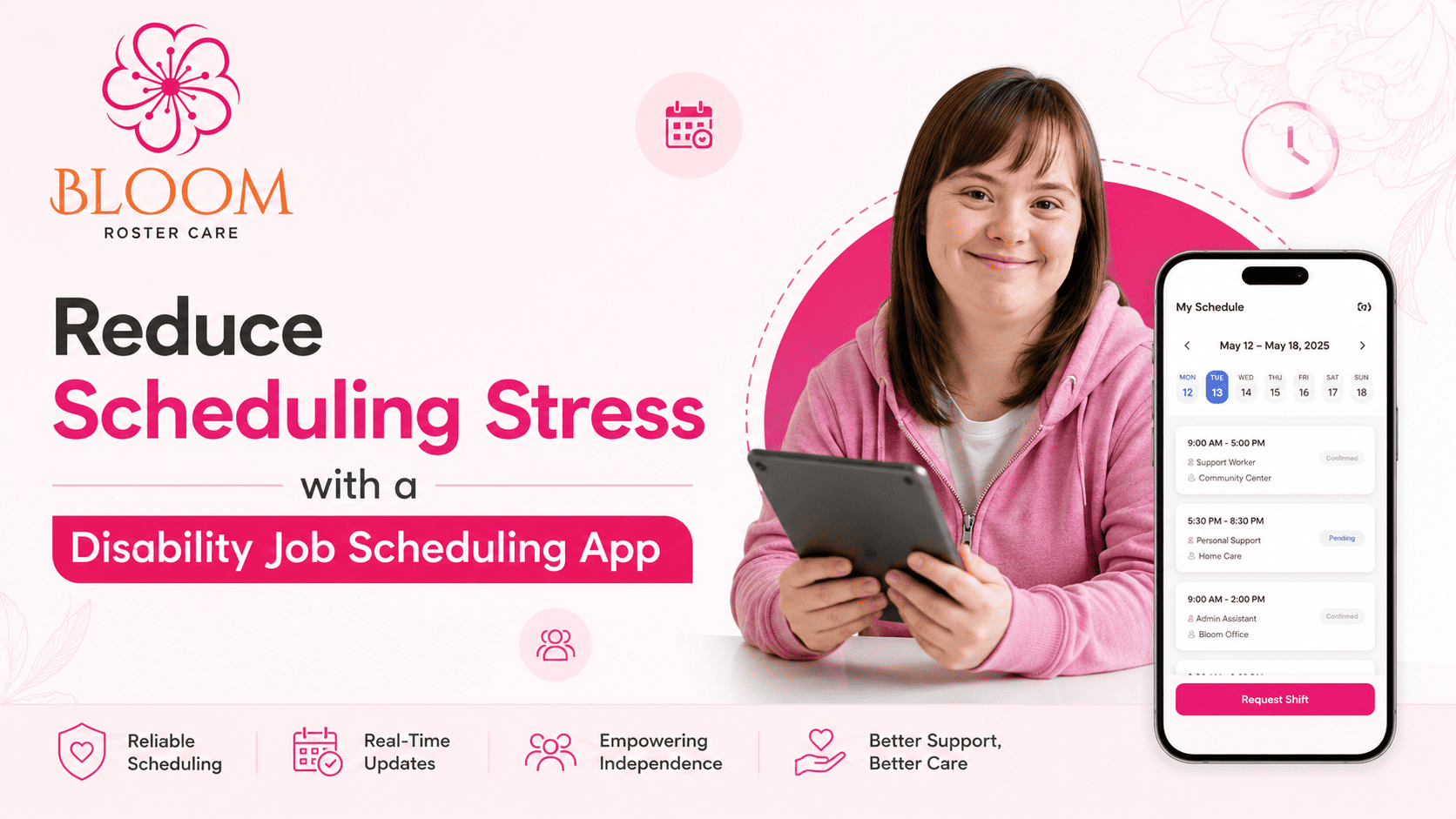
Setting up and managing a disability support organisation is no easy task. There is a lot to consider in disability support scheduling, such as allocating clients to support workers, tracking change-overs, and ensuring everything complies with the relevant legislation. With disability support growing so fast, a lot of disability support providers are seeking possible digital ways to assist with scheduling. This is where digital job scheduling for disability support helps reduce errors and ensure correct support workers are on duty. By automating many of the manual processes associated with rostering and by managing their workforce in this manner, organisations are able to spend less time dealing with timetables and more time with service users.
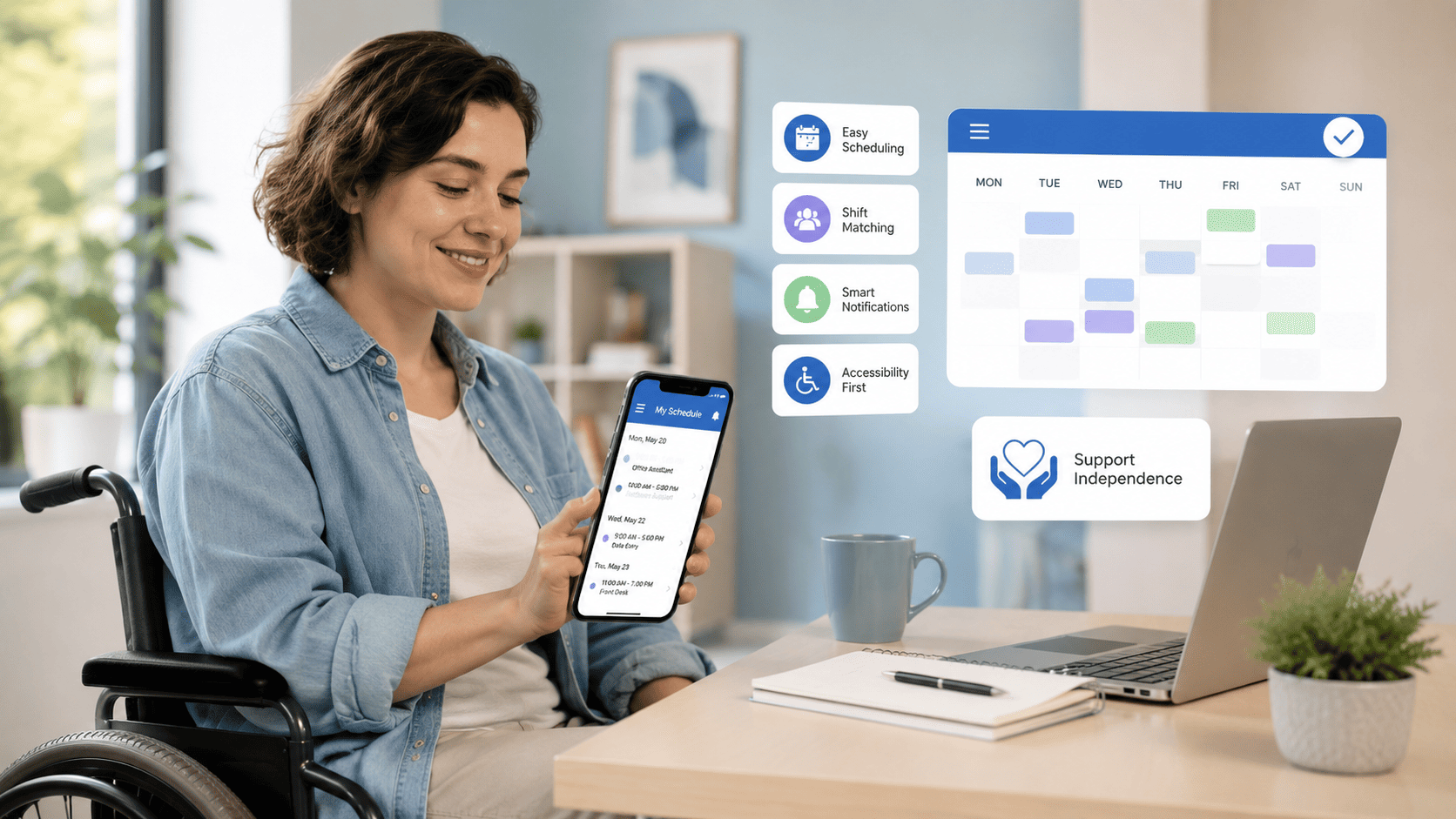
Challenges of Manual Scheduling
Inefficiency can result from using traditional methods for creating staff schedules (with the use of spreadsheets, paper-based rosters, and through manual communication). Managers can spend a lot of time creating schedules, communicating schedule changes and notifying employees of new shifts. The reservations and vacant spaces can be changed unexpectedly, sometimes with very short notice. Most of the time we had problems like the following:
- Last-minute shift changes
- Double bookings and scheduling conflicts
- Difficulty matching staff skills with client requirements
- Limited visibility of workforce availability
- Increased administrative workload
- Communication delays between coordinators and support workers
These problems have the potential to affect service delivery, employee spirit and work flow.
How Technology Simplifies Workforce Scheduling
Instead of needing to create and update separate rosters every time they want to coordinate schedules, managers can create, edit, and send out all the needed information through one centralised scheduling application. Companies can also use scheduling applications for automated scheduling tasks so employees have instant access to their upcoming shifts via mobile devices — thus, reducing confusion and errors in scheduling and keeping everyone up to date with current activities.
- Automated roster creation
- Real-time schedule updates
- Mobile access for support workers
- Shift notifications and reminders
- Availability tracking
- Improved communication between teams
Eliminating manual processes allows companies to increase employee productivity without compromising the quality of service provided to customers.
Battery Staff Allocation and Client Matching
An essential component in supporting individuals who are disabled through disability support services is assigning workers to clients that possess the appropriate skill sets, qualifications and experience. The challenge of monitoring such qualifications and experience is particularly hard for managers when planning work over a full year; however, digital scheduling helps managers find appropriately skilled employees to service their customer base depending on a range of needs such as availability, qualifications, experience, location and choice. When providing support for clients with disabilities, scheduling can be a demanding role.
There are numerous components that make up a schedule in disability support, such as assigning support workers to clients, managing shift changes and ensuring compliance. With the influx of growth in the disability services sector, organisations are now looking towards possible digital solutions to assist with operational efficiency and simplify the processes. A disability job scheduling app process assists with reducing errors and ensuring the right support worker is assigned at the right time.
Enhancing Operational Efficency
Through automating the scheduling of your workforce, you can free up time to focus on other planning and management tasks – key staff can get back to providing the high-quality care, support and supervision your service users need. Our providers also integrate scheduling software with disability workforce management software to help you gain a better understanding of holiday patterns, sickness, leave and workforce planning and to make more informed decisions.
- Reduced paperwork
- Faster roster adjustments
- Centralised workforce information
- Improved reporting capabilities
- Greater transparency across teams
With fewer administrative obstacles, managers can focus on strategic priorities rather than routine scheduling tasks.
Improving Communication Across Teams
Reliable communication between support workers and service providers is important. Support workers need quick access to their roster, client information and updates. Rostering software means staff can be instantly notified whenever there is a change and spares the need for them to call, email or manually check for updates.
- Reduce missed shifts
- Improve staff accountability
- Increase schedule visibility
- Enable quicker responses to emergencies
- Enhance team collaboration
As a result, both managers and employees experience less stress and greater confidence in daily operations.
Supporting Compliance and Record Keeping
In order to satisfy mandatory rules and collect important records, disability service providers must have a well-documented way of keeping track of staff records related to their employment. Digital record-keeping (with respect to disability), including a healthcare rostering app for disability, provides agencies with an automated method of keeping track of hours worked, qualifications, certifications and attendance of employees. Accessing digital record-keeping can decrease compliance risks and streamline the auditing process all at once. Digital record-keeping improves the accuracy of data and eliminates many of the challenges faced by paper-based systems.
Greater Flexibility for a Mobile Workforce
Support workers need to travel often between client locations; therefore, flexibility is essential. With mobile scheduling tools, support workers are able to access their rosters and accept/decline shifts or request time off from any location. Think about it: flexible scheduling increases employee engagement, productivity and morale. It also creates a more cohesive workforce that’s better equipped to handle change. Support workers can remain connected with their team even if they’re not physically present, and managers can see in real-time where their teams are. Disability workforce management software combined with mobile scheduling software gives you a top-tier workforce management solution that improves not only productivity but employee engagement as well.
Reducing Stress for Managers and Support Workers
Scheduling difficulties can lead to extra stress for both the person coordinating the schedule and the people that are assigned to work on that schedule. The frequent calls, manual updates, and ongoing changes to the schedule can cause major headaches for many people in the workplace, thus hindering productivity. Digital scheduling systems help with this problem by providing a much greater degree of visibility, automated workflows, and immediate communication between managers and their support staff so that they can resolve scheduling issues faster and support staff can be much more confident in their schedule at work.
Conclusion
High-quality disability services require an efficient process for delivering care through effective scheduling. Manual recruiting methods often produce administrative burdens on the organisation, generate communication gaps between staff and clients and create inefficiencies within the workforce. Adopting a modern health care rostering app for disability support services will allow for automation of scheduling processes, improved coordination of workforce efforts, enhanced compliance with governing authorities, and reduced operational stress. When combined with a robust and reliable scheduling platform, providers can maximise their ability to build a better workforce and improve delivery of disability services, which ultimately results in a better experience for all parties involved.
Also Read :- Manage Medical Staff Better with a Healthcare Roster App