How to Match the Right Support Worker to the Right Participant Every Time
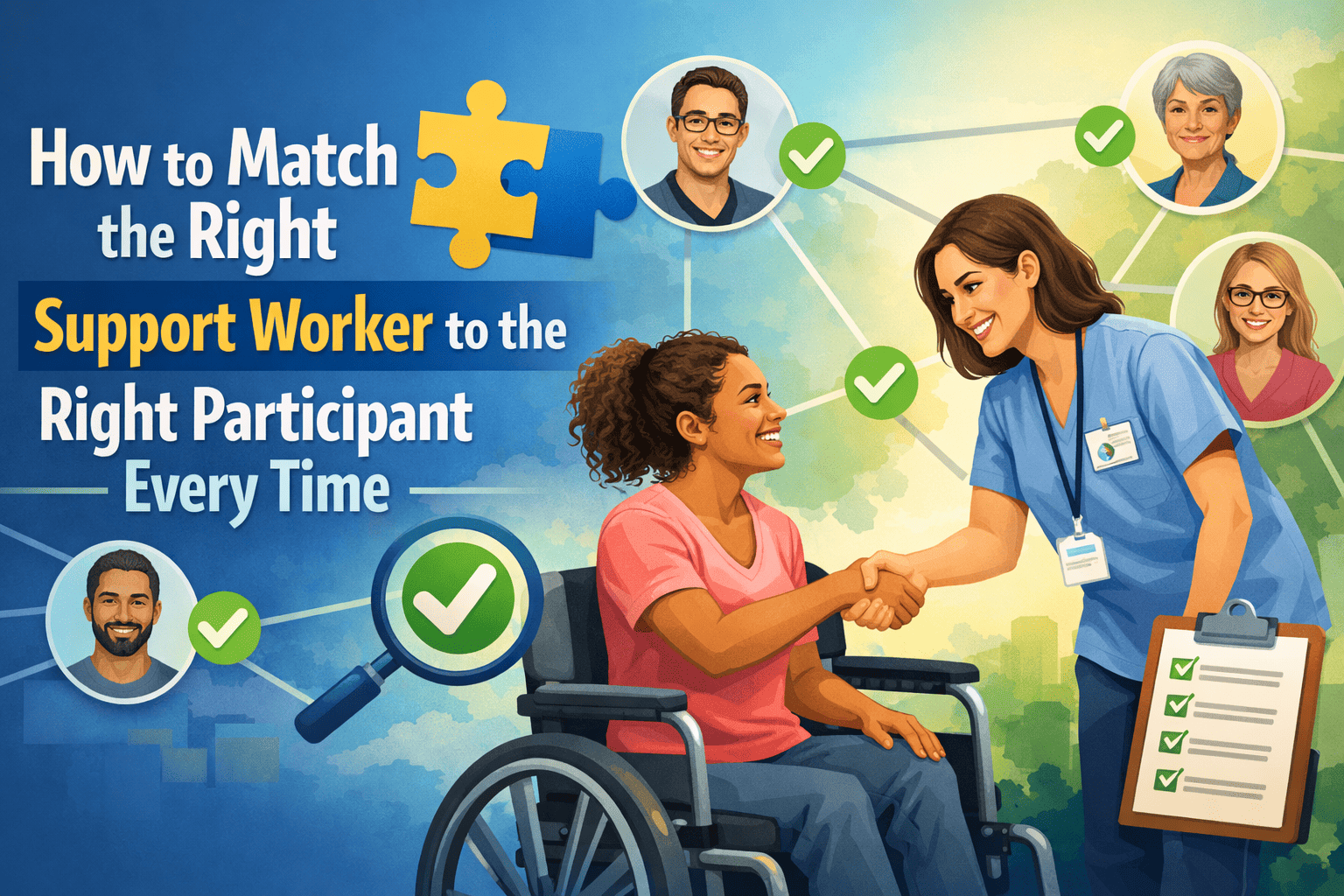
The participant's relationship with their support worker is the most important one could have in the world of disability support. Not only is it a matter of rendering a service, but rather there are aspects like trust-building, independence, and a deep connection that enlivens lives to be considered. However, what's the secret to that perfect match becoming a regular practice? It's a hard task indeed that several organizations encounter while trying to see through the maze of people's different needs, characters, and schedules. This blog will shine a light on the significant techniques and resources to use, one of which is a very sturdy rostering system, in order to make sure that each participant gets the most suitable and beneficial support.

Understanding the Participant: Beyond the Checklist
The first and most crucial step consists of creating an extensive and subtle comprehension of the participant. This truly surpasses the mere filling out of an intake form. It integrates:
- Holistic Needs Assessment – naturally, one must grasp the participant's disability, medical needs, and specific support requirements. But a deeper investigation into their lifestyle, routines, and preferences is also necessary. Do they prefer tranquil evenings or energetic outings? Are they up at the crack of dawn or do they stay up late?
- Personality and Interests – What are the driving factors behind their existence? What are the people's hobbies, likes, and conversation starters? A person indulging in gardening might flourish having a support worker who shares that interest, leading to more fun and worthwhile interactions.
- Communication Style - What's the best way for them to get their message across? Using spoken words, signs, symbols or technology? Finding a support worker who has the capability of comprehending and reacting to their communication style is crucial in establishing trust and also preventing uneasiness.
- Cultural and Social Background – It is absolutely necessary to consider and respect cultural and social differences. A support worker who is aware of the participant's history and culture can make the surroundings more pleasant and accepting.
- Goals and Aspirations – what do they dream of? Are they going for acquiring a new skill, becoming more self-reliant in some activities, or taking part in social events? Being aware of their dreams enables you to pair them with a worker who will be there for them in realising their goals.
In order to obtain this information, it is necessary to conduct open, sympathetic talks with the participant, their family, and the current care teams. This is a continuous process since needs and preferences might change over time.
Understanding the Support Worker
Every participant has his or her own unique characteristics and so do the support workers. It is very necessary to have a comprehensive understanding of the whole support worker pool:
- Skills and Qualifications – what are their specific areas of expertise besides the mandatory certifications? Do they have experience with certain conditions, complex care needs, or specific equipment?
- Personality Traits – Do they possess qualities such as a patient, energetic, calm, humorous, or analytical person? Think of how their natural disposition may fit in or clash with the personality of a participant.
- Interests and Hobbies – the support worker who is interested in the same things as the participant can make a support session that is routine into a shared enjoyable experience. This is where the magic of connection truly happens.
- Communication Style – Do they prefer direct communication or a more gentle approach? Are they good listeners?
- Availability and Location – practical considerations such as availability, geographical proximity, and transport methods are very important for consistent and reliable service delivery.
- Experience and Training – What level of experience do they have, and what ongoing training have they received? This helps to ensure they are equipped to handle diverse needs.
It is very important to keep detailed profiles for each support worker, which are regularly updated with feedback and the latest training.
The Art of Matching: Bringing It All Together
With comprehensive profiles for both participants and their support workers, the art of the matching process was guided by data and intuition.
- Needs-based Matching – this is the essential layer, ensuring the support worker has all the necessary qualifications and skills to take care of the participant’s needs as well as possible. This involves medical needs, personal care, and using specific behavioural support techniques.
- Personality-based Matching – this is where the "click" takes place; think about how personalities might be good for each other. An extrovert participant may do great with an equally sociable worker, while a shy person may want a softly spoken and gentle presence.
- Interest-based matching – partnering up people who have similar interests can change the scenario of support to companionship. Picture a participant who is passionate about painting and a support worker who is also a painter; there will be no limit to the fun and creative activities they can do together.
- Consistency and Continuity - When a great match is found, aim for consistency. Different support workers coming in and out regularly can be a source of disturbance and distress for the participants. A relationship that is stable builds trust and allows for a deeper understanding of the changing needs.
- Trial and Review – it is not necessary that every match be perfect from the first day; rather, a trial period and a solid review process should be put in place. Get feedback from both the participant and the support worker. Be ready to make changes if the initial match is not as successful as expected.
The Constant Pursuit of Quality
It’s not just a one-time thing finding the right support worker for a participant; it’s an ongoing commitment.
- Regular Communication – keeping participants, their families, and support workers in the communication loop is essential. Always ask for their opinions, and also provide them with channels through which they can express their grievances or make suggestions for improvement.
- Ongoing Training and Development – continuous professional development of your support workers is a good investment. It guarantees that they are still in the loop about the latest practices, new technologies, and changing support requirements.
- Supervisor Oversight – Regular supervision and check-ins with support workers offer a chance to talk about the difficulties, provide assistance, and make sure that the matches are working effectively.
- Data Analysis – Data from your rostering system is to be employed for the purpose of drawing trends, measuring the success of matches, and continually improving your allocation strategies.
Conclusion
In providing assistance to disabled individuals, the primary aim is to build relationships that are substantial and empowering. By the application of a holistic view of the understanding of both participants and support workers, and by allowing the matching of people to be an art and also by the deployment of the sophisticated rostering system, the organizations can considerably enhance the chance of creating strong and beneficial relationships. The long way this will go in helping participants and support workers with their private needs, besides introducing a more efficient and effective organisational model covering the delivery of the service to the whole organisation. The ideal pairing may appear to be out of reach, but it is a goal that, with hard work and the right instruments, can be realised and recognised as deeply rewarding.
Also Read : How to Reduce Admin Time by 50% Using Automated Scheduling